

The race to build AI applications has accelerated dramatically over the past two years, but many developers are discovering that attracting users is only part of the equation. As AI products become easier to create and more expensive to operate, attention is shifting toward a different challenge: building sustainable business models.
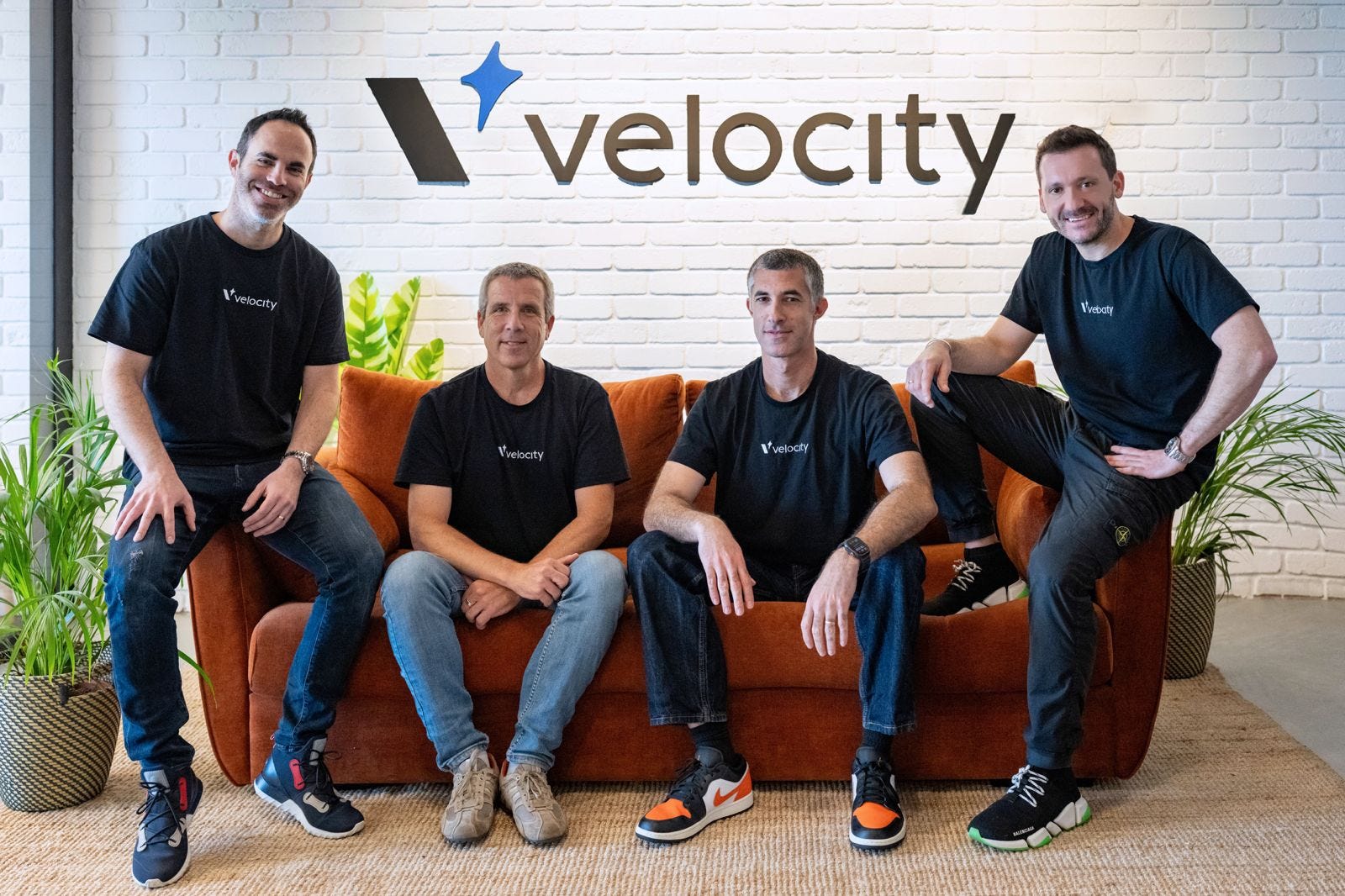
Velocity is betting that solving that problem requires a new layer of infrastructure. The startup announced that it has raised $27 million in seed funding to develop monetization and distribution technology for AI-native software. The round was led by NFX and Red Dot Capital Partners, with participation from Stardom Ventures, Corner Ventures, and Transcend.
Founded by Tal Shoham together with Amir Shaked and Nimrod Zuta, the company is led by executives whose backgrounds include more than a decade building monetization, advertising, and growth infrastructure at ironSource and Unity.
The Business Model Behind AI Is Still Evolving
The explosion of generative AI has produced a wave of applications spanning productivity, software development, creative tools, search, and consumer services. Yet despite widespread adoption, converting free users into paying customers remains difficult for many AI companies.
At the same time, operating costs continue to climb as users expect increasingly advanced responses and richer AI experiences. For many companies, subscription revenue alone has proven insufficient to offset growing inference expenses.
Velocity argues that this has led developers toward restrictive pricing strategies that may ultimately limit product growth. Prompt limits, feature restrictions, and early paywalls can reduce costs, but they may also discourage engagement before users fully experience a product’s value.
Instead, the company is advocating for an additional monetization model that allows AI applications to expand free usage while generating revenue through native advertising tied to user intent.
Building Around Conversations Instead of Cookies
Traditional digital advertising has long relied on historical browsing behavior and user profiles. Velocity believes AI applications present a fundamentally different environment.
Because users interact through natural language, conversations reveal what someone is trying to accomplish in real time. The company has built infrastructure that interprets multi-turn conversations, extracts structured intent, and introduces relevant recommendations within the AI experience itself.
According to CEO and co-founder Tal Shoham, this shift represents a broader change in how software will grow.
“AI is becoming the dominant interface for software, creating entirely new opportunities around monetization and distribution,” Shoham said. “We believe the biggest opportunity of the AI era will not only be building products, but also monetizing and distributing them. We’re building the infrastructure layer that helps solve both.”
Velocity says its platform combines three components: an AI-native advertising network for intent-driven placements, a mediation and auction system that maximizes revenue across demand sources, and a conversation intelligence layer that converts dialogue into structured, privacy-safe intent signals.
Shoham said maintaining the quality of the user experience remains a priority.
“AI monetization should feel native to the experience,” he said. “Users expect AI interactions to be useful, contextual, and trustworthy. Our goal is monetization, recommendations, and product discovery that enhance the experience rather than interrupt it.”
Early Customers Report Positive Results
The company says its technology has already been deployed by AI-native applications seeking to balance monetization with user growth.
Among those customers is Leadtech / MAU. Diego Díaz, CEO of the Subscription Division at Leadtech / MAU, said the company has been encouraged by both the product and the working relationship.
“Velocity has been a great partner to work with. The team is responsive, collaborative, and moves quickly,” Díaz said. “We’ve been impressed by both the product and the people behind it, and we’re excited about the opportunities ahead. We’re confident this partnership will lead to meaningful outcomes as we continue building together.”
Velocity also highlighted its work with AIBY’s Chaton application.
Artsiom Turavets, Lead Product Manager at AIBY (Chaton), said the partnership has produced “strong performance while maintaining a high-quality user experience,” adding that the company has seen “meaningful monetization outcomes alongside healthy engagement and retention metrics.” He also described Velocity as “a true partner” that consistently develops tailored solutions.
Investors See a Long-Term Opportunity
Investors participating in the round believe AI-native software will require new infrastructure designed specifically for growth.
Gigi Levy-Weiss, General Partner at NFX, said every major technology platform creates new infrastructure categories. He believes AI-native applications represent one of the largest emerging technology platforms and said Velocity is building “the growth infrastructure layer that enables that intent to drive monetization, distribution, and growth.”
Red Dot Capital Partners shares that view. Partner Atad Peled said AI-native applications are creating “a massive new opportunity around user intent” and pointed to the founding team’s experience building and scaling global software platforms as a differentiator.
For Velocity, the funding marks the next step in pursuing what it believes will become a defining layer of AI infrastructure. Shoham argues that every major computing era has been shaped by a dominant signal, concluding that, “We believe the AI era will be built around intent, and we’re building the growth infrastructure layer to monetize and distribute through it.”