

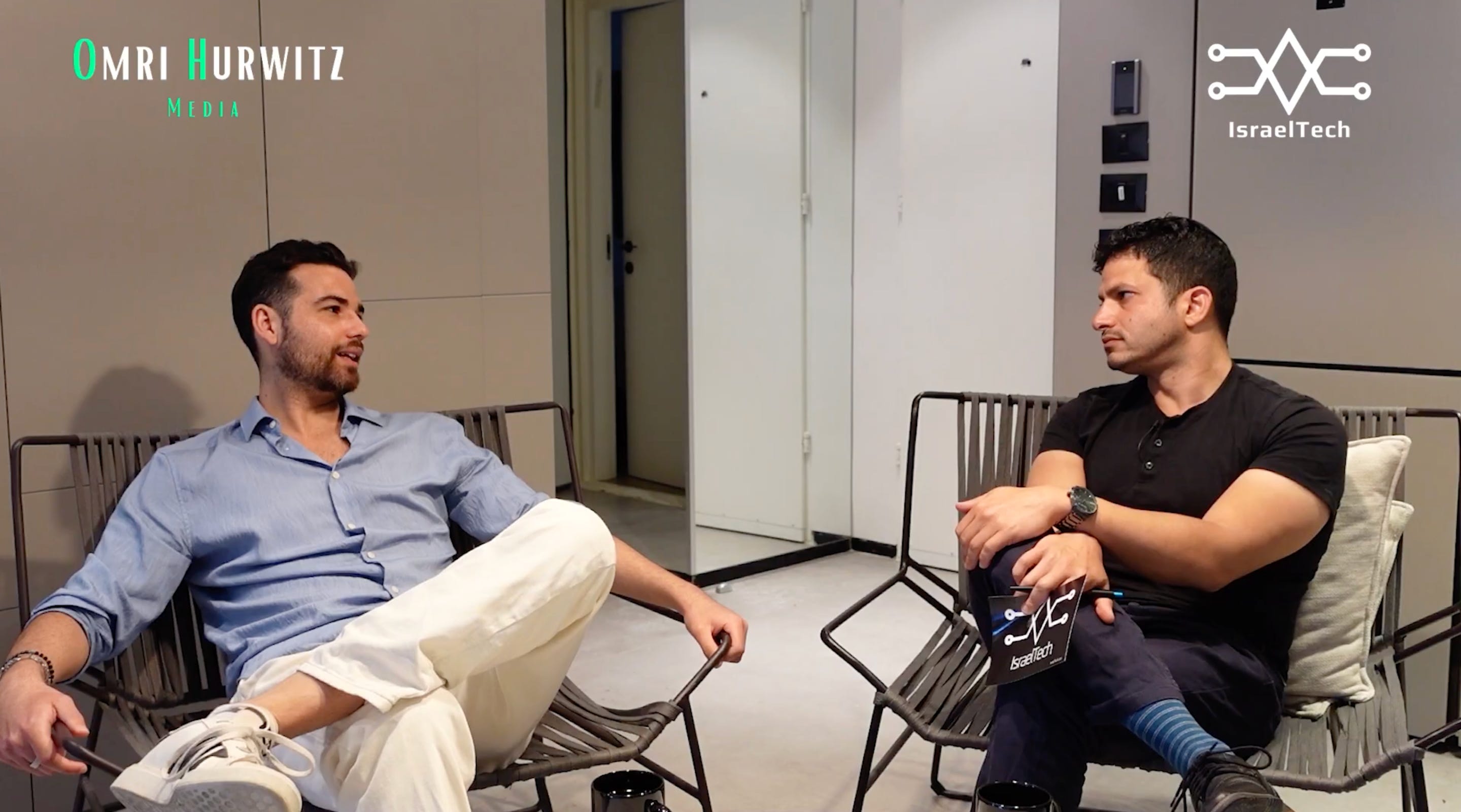
When Omri Hurwitz talks about the venture capital industry, he does not reach for diplomatic language. In a wide-ranging conversation with Yoel Israel, the founder of Omri Hurwitz Media laid out a view of the VC landscape that is blunt, data-adjacent, and, to anyone who has spent time close to the industry, difficult to refute.
The full conversation is available on YouTube, and the section on venture capital alone is worth the watch.
His core claim is this: roughly 5% of VCs account for roughly 95% of the capital returned in the asset class. It is a Pareto distribution taken to an extreme that, as Hurwitz noted, you would not find in hedge funds or most other financial models. In almost any other industry, a gap that wide between the leaders and the rest would trigger a structural reckoning. In venture capital, it mostly gets ignored.
What makes it worse, in Hurwitz’s view, is what happens in the space left by underperformance. The VCs who are significantly behind on returns for their LPs are often the loudest voices in the room. They are on podcasts. They are posting thought leadership on LinkedIn. They are telling founders what the market wants and where to build. And founders, hungry for signal in a noisy environment, are listening.
“They’re severely underperforming and they’re saying all this stuff throughout the media,” Hurwitz said. “Founders are just getting so confused. Just listen to the ones who make the money.”
The herd mentality that flows from this dynamic is one he finds particularly damaging. Software is going to eat the world. SaaS is dead. AI is going to kill everyone. AI is not going to replace humans, only humans who do not use AI. The narrative shifts constantly, driven not by results but by whoever has the largest audience and the most confident delivery.
This is where Hurwitz draws a hard line between platform investors and everyone else. Firms like Andreessen Horowitz, Sequoia, and Lightspeed occupy a fundamentally different category, and he is unusually direct about what working with them actually means.
“It’s like good that they own you,” he said. “They make the calls and it’s good because they have the leverage.”
That framing is deliberate. Hurwitz is not describing a power imbalance to be wary of. He is describing an arrangement that, for the right founder, is genuinely advantageous. Platform investors bring the international network that gets a company into rooms with Fortune 500 clients. They have the operational infrastructure, the follow-on capital, and the pattern recognition from scaling dozens of companies before yours. They steer the ship, and for a founder whose strength is product or technology rather than distribution, that is not a loss of control. It is access to a machine that most founders could not build on their own.
“They can scale you,” Hurwitz said simply.
The problem is that most founders do not raise from platform investors. They raise from the other 95%, many of whom talk like platform investors and deliver very different results. Knowing the difference before you sign a term sheet, Hurwitz suggested, is one of the more important things a founder can do.
Israel pressed him on whether there is a middle ground, a way to take VC money, absorb the useful input, and filter out the noise. Hurwitz was skeptical. In his experience, the pressure to make investors happy creates a particular kind of founder behavior that is more concerned with optics than outcomes. The founders he respects most are the ones who understand whose money they took and why, and who are not waiting for board approval before they move.
He also made clear that the calculus changes depending on which tier of investor you are dealing with. If a top-tier platform firm has written you a check, deferring to their judgment on major decisions is not weakness. It is rational. They have the track record and the infrastructure to back their calls. If a mid-tier or underperforming fund has written you a check and is making the same demands, that is a different conversation entirely.
The uncomfortable implication sitting underneath all of this is that the venture capital model, as currently constructed, may not be optimally designed to serve founders at all. It is designed to serve fund economics. For founders who understand that distinction early, and who know exactly which category their investor falls into, a great deal becomes clearer.