

Modus has emerged from stealth with a $10 million seed round led by Insight Partners, announcing plans to build what it calls the Context Warehouse, a new infrastructure layer for enterprise AI, as reported by Axios. Soma Capital and Bullet Ventures participated in the round, alongside prominent technology founders and operators including Eyal Kishon, Nadav Avrami of Wix and Dazl, the co-founders of Cyera, and the founders of Epsagon.
The Tel Aviv-based company is targeting what it describes as the Context Gap: the distance between what AI can access and how a business actually works. Its answer is an independent, AI-native foundation that learns how an organization operates and gives every AI agent only the context it needs.
What the Context Warehouse Does
Enterprises deploying AI in production are running into a counterintuitive problem. Connecting models to more systems often makes them slower, more expensive, and less reliable. AI agents over-fetch information, re-query enterprise systems, and burn through far more tokens than necessary because they cannot tell which context actually matters. Costs climb. Answers cannot be trusted. Pilots stall before reaching production. In Modus’s framing, the problem is not too little context but too much of the wrong context.
The Context Warehouse is designed to close that gap. It continuously learns how a business operates, keeps that understanding current as the business evolves, and composes only the relevant context required for each AI interaction. The company says this allows agents to reason on signal instead of noise while reducing unnecessary retrieval and token consumption by up to 10x.
Modus draws a direct parallel to an earlier era of enterprise infrastructure. Just as data warehouses became the system of record for enterprise data, the company believes the Context Warehouse will become the system of understanding for enterprise AI. There is one important difference. Where a data warehouse takes years of pipelines to fill and maintain, the Context Warehouse fills itself, learning from the work already happening.
Access Is Not Understanding
Models today can reach tables in a warehouse, dashboards in BI tools, documents, tickets, code repositories, and collaboration systems. What they cannot inherently understand is which definitions the business trusts, which dashboard teams actually rely on, why a metric changed last quarter, or which business logic should take precedence today.
Across the industry, enterprises are investing in context engineering, experimenting with context layers, and starting to build their own company brain. The terminology differs, but the objective is the same: giving AI a continuously maintained understanding of how the business actually works. Modus believes enterprises should not have to build and maintain that understanding themselves.
Rather than relying on documentation, semantic models, or application-specific context that must be manually maintained, the platform learns from real usage across structured data, unstructured data, and the tribal knowledge in between. That includes the queries analysts keep coming back to, the dashboards teams rely on, and the pipelines, docs, and decision threads that trace how the business really runs. Context is earned from real usage, not declared once and left to drift.
“Companies are no longer just trying to get their teams to use AI. They are asking how to scale it across the organization without accuracy dropping, governance breaking, or costs spiraling,” said Daniel Shimoni, CEO and co-founder of Modus. “Whether people call it a company brain, a context layer, or context engineering, they are all trying to solve the same problem. We believe every enterprise needs a continuously maintained understanding of how the business operates before it can build any of those things. That is what the Context Warehouse provides.”
The Founding Team
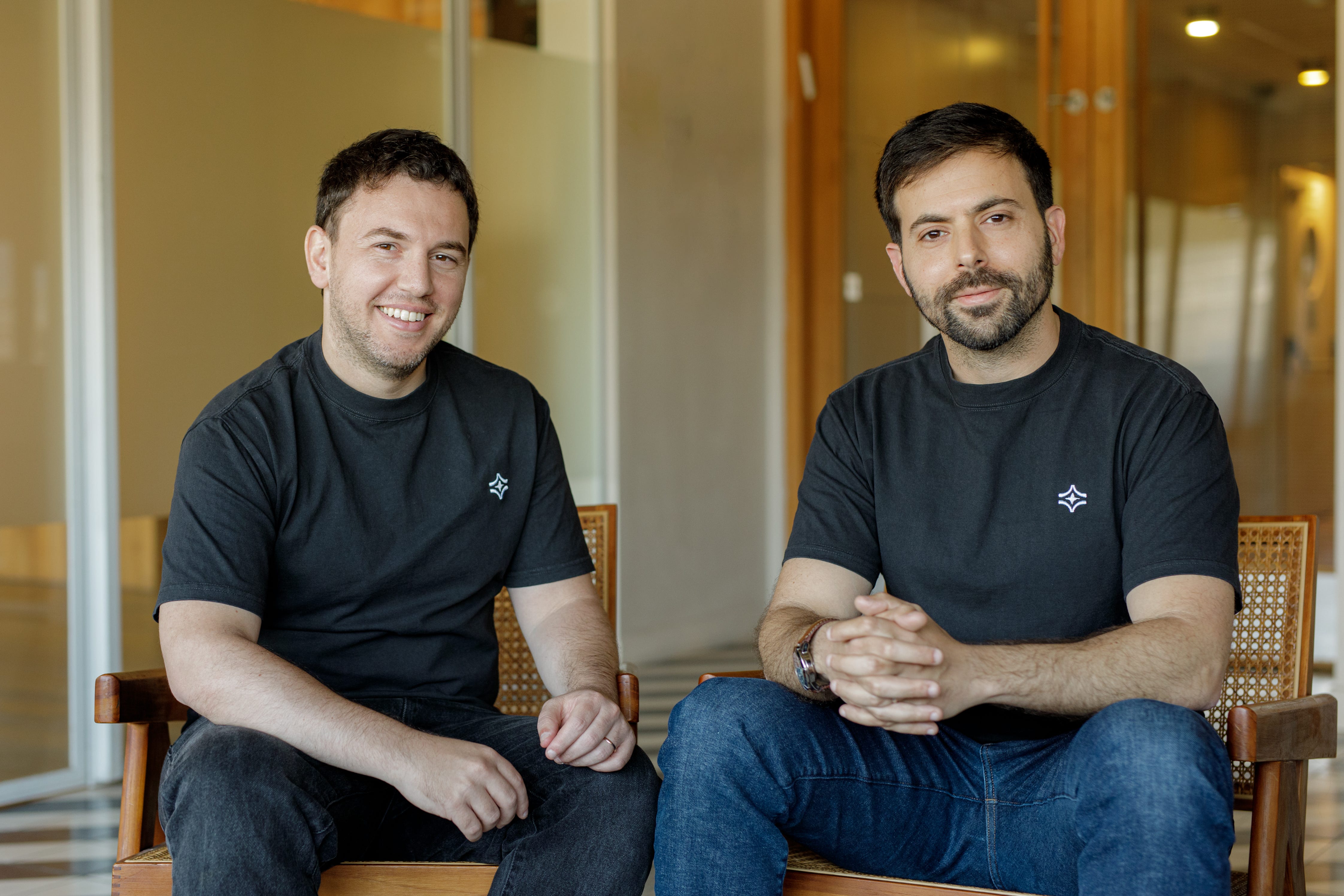
Modus was founded by Shimoni, former VP of Product at Lusha, and Tomer Mesika, former Head of Architecture at Cyera. At Lusha, Shimoni saw that AI was only as useful as the business context behind the data. At Cyera, Mesika built infrastructure to classify, govern, and secure enterprise information at scale. Their careers converged on the same realization: the systems enterprises rely on were never built for AI agents.
The platform operates independently of any data warehouse, AI model, or application platform. Enterprises can adopt new models and tools without rebuilding how context is managed, and the product works with the agents teams already use, including through MCP. It learns from metadata and usage patterns across data warehouses, BI tools, pipelines, code repositories, documentation, and collaboration systems, without requiring organizations to centralize sensitive business data. The reasoning is simple: context cannot live inside one platform if the business does not live inside one platform.
Governance is enforced before context reaches the model. Every AI interaction receives only the information it is authorized to access, and sensitive customer data remains inside the customer’s environment. Agents, the company argues, are only as safe as the context they receive.
Maintenance Is the Real Cost
Many enterprises have already started building their own context layers and company brains. Modus contends that the challenge is not building the first version but keeping it accurate as the business changes over time.
“Building a context layer is not the hardest part,” said Tomer Mesika, CTO and co-founder of Modus. “Keeping it current is. Every change your business makes changes the context AI depends on. The real decision is no longer buy versus build. It is whether you want to own the ongoing cost of maintaining that understanding. We built the Context Warehouse so engineering teams can build what differentiates their business instead of maintaining the infrastructure underneath it.”
Early Deployments and Investor View
Modus is already deployed with enterprise customers across financial services, technology, and SaaS. The company says those organizations have improved AI accuracy, strengthened governance, accelerated response times, and reduced the cost of operating AI at scale.
“Every major wave of enterprise software has required a new foundation,” said Ganesh Bell, Managing Director at Insight Partners. “Data warehouses became foundational infrastructure for enterprise data. As AI becomes production infrastructure, organizations need a system of understanding that every agent and application can build on. We believe Modus is defining that category with the Context Warehouse.”
Today, organizations use the Context Warehouse to improve the accuracy, efficiency, and governance of AI agents. Over time, Modus sees the same continuously maintained foundation supporting a more proactive class of AI: surfacing what matters, detecting what changed, and helping teams move from trusted answers to trusted action.