

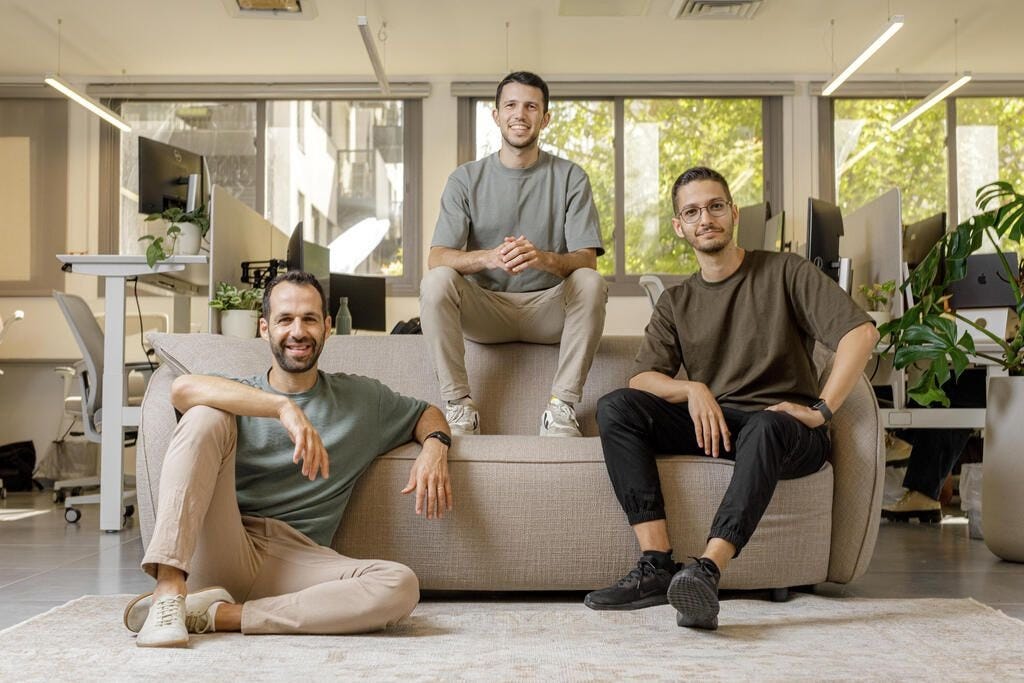
Mate Security has raised a $35M Series A led by Canaan Partners, closing the round roughly eight months after the company stepped out of stealth, as reported by Axios. Insight Partners, Team8, and M12, Microsoft’s Venture Fund, all participated. Every backer from the company’s oversubscribed $15.5M Seed round returned for the Series A, pushing total capital raised past $50M.
That sequence matters more than the headline number. Seed rounds get followed. Seed rounds do not usually get followed this quickly, by every existing investor, at this size, in a category as crowded as security operations.
The Round in Context
Mate Security describes itself as the company building the open foundation for AI security operations. The Series A arrives against a backdrop of accelerating enterprise demand: a growing number of Fortune 500 enterprises have adopted Mate as their agentic security operations platform, and the company has grown by over 500% since Q3 2025. Capital from this round is earmarked for meeting that demand rather than manufacturing it.
Canaan led. Insight, Team8, and M12 followed on. For a company that was still in stealth in late 2025, assembling that particular group of names on a Series A cap table represents a strong signal about how quickly the market has moved.
Why Security Operations Became the Pressure Point
Founded by Wiz and Microsoft veterans, Mate addresses a critical cybersecurity challenge: security operations architecture is not designed for the speed and dynamic nature of AI-scale attacks.
The failure mode is not purely a volume problem. Many of today’s AI security solutions have failed to earn the trust of security teams, leaving analysts overwhelmed not just by a higher volume of alerts, but with AI outputs they cannot verify or act on with confidence. An unverifiable recommendation is not a time saver. It is a second investigation stacked on top of the first.
Mate was built to solve that.
The Product Argument
Mate provides an open, agentic security operations platform that enables organizations to contain AI-scale attacks. The platform is built on a patent-pending context layer designed for agent precision, powering specialized agents that detect, investigate, respond to, and hunt for threats based on a deep understanding of the customer’s business.
The company’s framing is that Mate builds an organizational “brain” equivalent to the collective knowledge of an experienced, elite cyber defense team, with a deep understanding of how the organization operates. As a result, Mate can make precise and fast verdicts.
Two worked examples illustrate the point. When a security alert is raised for multiple suspicious login attempts, Mate will know whether security testing was planned during this time, and will report this as a likely non-threat. If an employee downloads multiple sensitive files, Mate understands the broader organizational context, including personnel changes and document classifications, to accurately assess whether the behavior is a genuine threat.
Neither scenario requires exotic detection. Both require knowing things about the business that a generic model does not know.
Engineering for Trust
Investing in security know-how alone is not sufficient to build trustworthy AI security at scale. Mate invests heavily in bringing frontier-class AI for security. Mate’s agents run on persistent memory that compounds with every investigation, communicate through structured agent-to-agent protocols, and operate under least-agency principles, meaning that each agent only gets the permissions and context that its task requires.
“When we started Mate, we knew we had to invest in the foundation: context and trust, and build them deeply into our product,” said Asaf Wiener, CEO and Co-Founder of Mate Security. “We brought in some of the best AI builders and security experts, and I’m excited to see how well this approach is being received by the market. We will continue moving fast and stay laser-focused on our customers, as we expand into new markets and categories to build the Open Security Operations foundation of the future.”
The Architecture Underneath
Mate provides a single, open place where it collects, resolves, cleans, and maintains the customer’s business knowledge in a Security Context Graph, then lets AI security operations run on that governed context managed by Mate’s orchestrator agent.
This foundation allows Mate agents, best-of-breed vendor subagents, and customer-built agents to encode deep organizational expertise, while Mate’s trust mechanisms enforce permissions, quality, coherence, auditability, and earned autonomous remediation and response. Mate queries evidence across the customer technology stack, at the source, and lets each agent use the same governed context and controls, so customers can extend AI security operations without fragmenting trust, reasoning, or response.
The word doing the work there is “earned.” Autonomy is not switched on at deployment. It accrues.
What the Investors Say They Bought
“AI is forcing a fundamental rethink of security operations. What stood out to us about Mate wasn’t simply its use of AI; it was the team’s conviction that trustworthy AI requires a deep understanding of how an organization operates,” said Joydeep Bhattacharyya, General Partner at Canaan. “By building a shared context layer that gives AI agents that understanding, Mate has taken a fundamentally different approach to security operations. The customer feedback and success we’ve seen in competitive evaluations reinforce our belief that the team is solving an important problem in a differentiated way.”
Insight Partners framed the bet around execution. “Security operations was not built for the speed or scale of modern AI-driven attacks,” said Teddie Wardi, Managing Director at Insight Partners. “Mate is doing something few security companies have managed: combining genuine AI depth with operational trust to rebuild security operations for the AI era. We are proud to support a team that consistently outexecutes.”
Team8 Capital, which specializes in the category, put it in comparative terms. “The pace in cybersecurity right now is faster than anything we’ve seen,” said Ori Barzilay, Partner at Team8 Capital. “As one of the leading cybersecurity venture funds, we have a clear view of what exceptional looks like, and Mate still shines above the rest. Their business traction, product development, and talent hiring are exceeding every benchmark for a company at their stage, even in the agentic era.”
M12 focused on the openness of the platform. “Mate is bringing frontier-level AI models to cybersecurity, and its exceptional growth reflects a defining shift we see in the market,” said Todd Graham, Managing Partner at M12, Microsoft’s Venture Fund. “Organizations want the freedom to adopt the latest AI advances without being locked into a single model or vendor. Mate’s open platform delivers exactly that for security operations, and we’re excited to partner with the team on this journey.”
The Bench
The team behind Mate combines experienced AI builders, who shipped production LLM systems, with cyber defenders who ran investigations in the world’s largest organizations. Mate’s AI experts specialize in high-stakes business and security decisions. They’ve held senior AI product and research leadership positions at companies including Meta and Microsoft, and include alumni of Cornell University, the Weizmann Institute, the Israeli Technion, IDF Unit 8200, and more.
Next Stop
Mate will be at Black Hat USA between August 3 and 6, 2026, in Booth 4717.
For a company eight months out of stealth with a Series A closed and a 500% growth figure behind it, the exhibition floor is now the easier part. The harder test is whether governed context holds up as the deployment count climbs.