

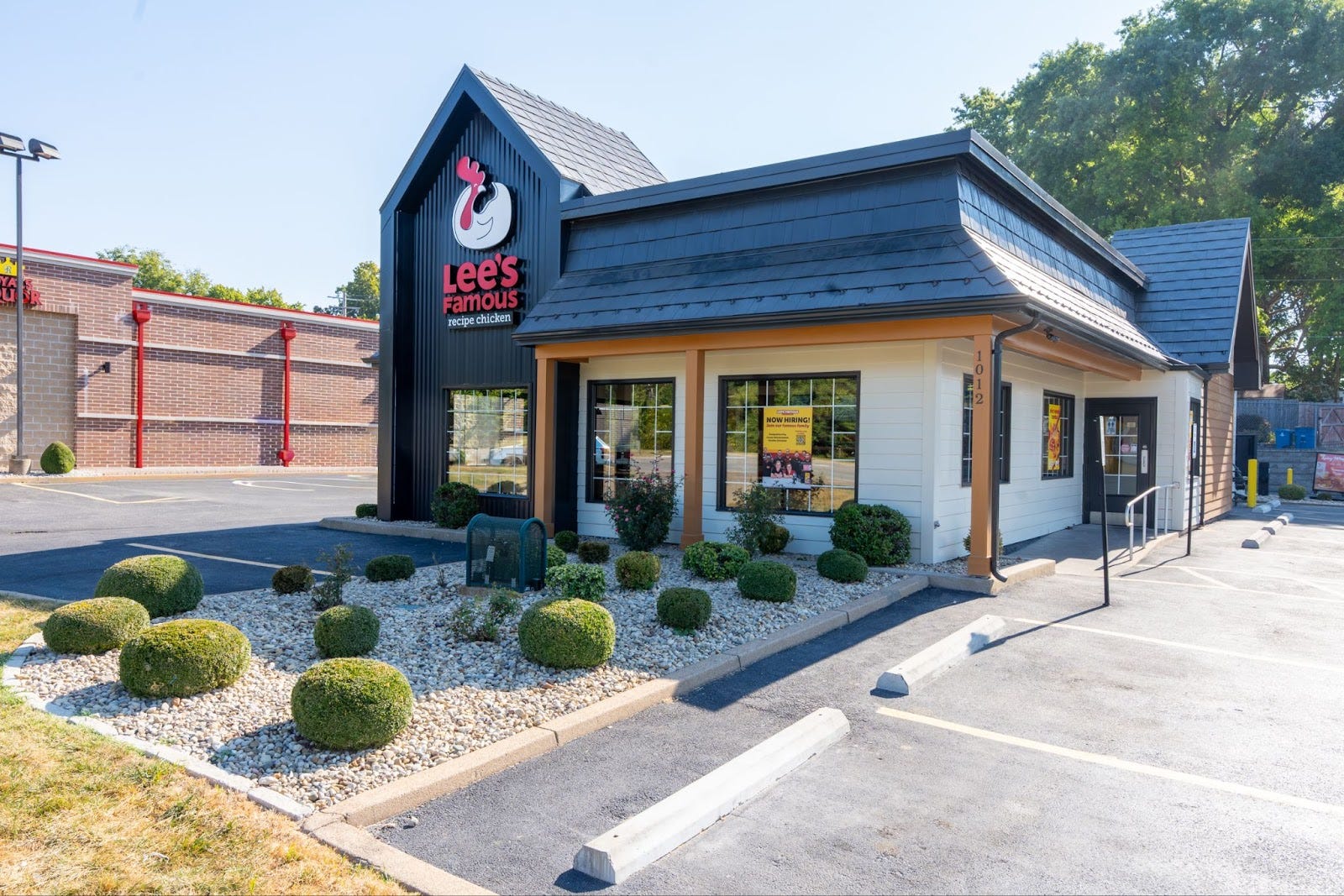
The drive-thru is increasingly becoming a focal point for operational innovation in the quick-service restaurant industry. It is where labor shortages are most visible, where speed expectations are highest, and where consistency is most difficult to maintain. Lee’s Famous Recipe Chicken is now addressing these pressures by expanding access to Hi Auto’s AI Order Taker across its franchise network.
The expansion follows a 30-location rollout that demonstrated strong performance and provided the operational validation needed for broader availability.
Standardization Enables System-Wide AI Capability
Before introducing AI at scale, Lee’s focused on a foundational challenge: inconsistent systems across locations. The company unified its POS system and menu database, creating a standardized operational framework across its restaurants.
This alignment was essential for AI deployment. Without consistent menu structures and backend systems, performance can vary widely between locations, limiting scalability.
With this foundation established, Lee’s tested Hi Auto in both company-owned and franchise stores under live drive-thru conditions to ensure real-world readiness.
Optional Rollout Preserves Franchise Autonomy
A defining feature of the expansion is that adoption is not mandatory. Franchisees are being given access to Hi Auto’s AI Order Taker but retain full discretion over whether to implement it.
This approach reflects Lee’s broader philosophy of empowering operators rather than enforcing top-down operational changes.
“Our operators are the backbone of Lee’s, and it’s our job to give them every advantage we can,” said Ryan Weaver, CEO of Lee’s Famous Recipe Chicken. “After seeing the results Hi Auto delivered in our first 30 stores, including better labor efficiency, shorter lines, a happier team, and guests getting their orders just the way they want them, we wanted to make this tool available to every franchisee who wants it.”
The strategy emphasizes adoption through demonstrated value rather than requirement.
Performance Data Supports Broader Adoption
Across participating locations, Hi Auto has achieved more than 95% order completion rates and 97% accuracy in live drive-thru environments. These figures are particularly important in high-volume restaurant settings where efficiency directly impacts guest experience.
In addition to order performance, the system has delivered operational improvements including three to eight labor hours saved per day, a 17% reduction in employee turnover, and a 1.5% increase in average ticket size.
These results position the technology as both a labor optimization tool and a revenue-supporting system.
Redefining Frontline Workflows In The Drive-Thru
The introduction of AI ordering changes how labor is allocated inside restaurants. By automating order-taking, staff are able to focus more on food preparation, order assembly, and customer interaction.
This reduces multitasking pressure during peak hours and helps stabilize operations when demand spikes.
Rather than eliminating roles, the system redistributes tasks to improve efficiency and consistency.
Hi Auto’s Operational Scale Strengthens Confidence
Hi Auto brings significant operational scale to the partnership. The company powers nearly 1,000 drive-thru locations globally and processes more than 100 million orders annually. It also serves approximately 200 franchisees across multiple regions.
This scale demonstrates that the platform has been tested in diverse environments, reinforcing its reliability for broader deployment.
Hi Auto CEO Roy Baharav has emphasized that the company’s mission is to empower operators with tools that improve performance while preserving human roles in service operations.
A Stepwise Evolution Of Drive-Thru Operations
Lee’s approach to AI adoption is incremental rather than disruptive. By combining backend system standardization with optional deployment, the company is creating a framework where innovation can scale without forcing uniform operational change.
This ensures franchisees can adopt technology at their own pace while still benefiting from centralized investment in modernization.
As rollout continues, Lee’s strategy may serve as a model for how mid-sized QSR brands can integrate AI into core workflows while maintaining operational flexibility and franchise independence.